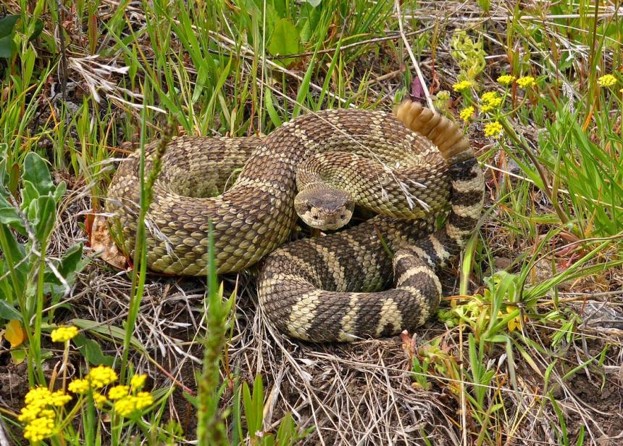
During your summer outings at Grant PUD’s Columbia River-side recreation areas, you may occasionally encounter one of our region’s most notorious local residents – the Western rattlesnake.
Washington’s only venomous snake, the Western is recognizable by its triangular head, diamond skin pattern and tail rattles. They’ll rarely attack unless cornered or taunted, but their natural camouflage makes it easy for people or pets to stumble across them, accidentally.
Always give these critters a wide berth – make sure your kids know that, too. When walking through brushy, scrubby areas, stay on established trails and carry a walking stick. Pay attention to the trail ahead of you. Keep your dogs on their leashes for their own safety.
We at Grant PUD wish you a happy, safe visit to our Columbia River-area recreation areas. Enjoy them to the fullest… and respect the locals!
Staying safe around rattlesnakes
The Washington Department of Fish and Wildlife offers the following tips on how to be safe around rattlesnakes and what to do in the rare case of a rattlesnake bite:
If you encounter a rattlesnake, move away: A rattlesnake will coil into a defensive posture if it cannot escape by crawling away. If you remain too close, the rattlesnake will usually warn you with its distinctive rattle. Its last defensive move is to strike. Remember, all of these warnings are meant to help avoid conflict. Rattlesnakes want to avoid you as much as you want to avoid them.
Rattlesnake bites
All rattlesnake bites should be considered life threatening. When someone has been bitten, time is of the essence. If possible, call ahead to the emergency room so anti-venom can be ready when the victim arrives.
If a rattlesnake bites a person or a pet, do the following:
- Keep the victim calm, restrict movement, and keep the affected area below the heart level to reduce flow of venom toward the heart.
- Wash the bite area with soap and water.
- Remove any rings or constricting items; the affected area will swell.
- Cover the bite with a clean, moist dressing to reduce swelling and discomfort.
- Get medical help immediately. Make sure the doctor who treats the victim knows how to treat snakebites and, if not, call the Poison Center at (800) 222-1222.
Things not to do:
- Do not allow the person to engage in physical activity such as walking or running. Carry the victim if they need to be moved.
- Do not cut or suck the wound, do not apply ice or cold packs to the wound, and never use a tourniquet.
- Do not give the victim stimulants or pain medications, unless instructed by a physician.
- Do not give the victim anything by mouth.
- Do not raise the bite area above the level of the victim’s heart.